

Summer is almost here, and if you’ve got a kid in a summer league, a camp program, or a travel tournament — or if you’re an athlete heading into your own summer season — you already know how fast things get busy. Practices, games, tournaments, it’s the best time of year!
It’s also the time of year when minor skin injuries are practically a guarantee.
Summer sports come with summer conditions: heat, humidity, outdoor surfaces, and a whole lot of sweat. That combination means cuts, abrasions, turf burns, blisters, and sand burns come with the territory. And unlike a fall or winter injury, summer wounds are up against a tougher environment — warm, humid air that slows healing and creates the perfect conditions for bacteria to set in if you’re not on top of things.
Here’s what to expect:
Beach volleyball and sand sports — A dive in the sand looks harmless, but friction burns from sand are sneaky. They tend to be shallow but wide, and sand embedded in a wound needs to be flushed out properly before anything goes over it. Left alone, these get infected faster than you’d expect.
Summer baseball and softball — Pitchers and catchers develop blisters on their hands within the first week of serious summer play. Infielders and baserunners add slide burns to the list. Ask any summer ball parent: blister management is practically a daily routine.
Swimming and water sports — Pool decks, starting blocks, and tile edges are unforgiving. Scrapes and cuts happen, and here’s the challenge: your athlete is going right back in the water. You need wound protection that’s actually waterproof — not something that floats off in the first lap.
Summer football and conditioning camps — Turf burns, contact abrasions, and the general wear of full-pad practice in the heat. The combination of sweat and friction means skin takes a beating, and minor wounds need consistent care or they can’t heal.
Mountain biking, skateboarding — Road rash is a badge of honor in these communities, but it’s also a real wound that needs real treatment. These abrasions are often larger and more irregular than a typical sports scrape, and they tend to be packed with debris that has to come out before healing can start.
Day camps and multi-sport programs — Kids in summer camps are running, climbing, and playing in ways their skin isn’t quite ready for after a school year indoors. Skinned knees, scraped palms, and minor cuts are daily occurrences.
Here’s the honest truth that doesn’t get said enough: summer is actually the hardest time of year for minor wounds to heal cleanly.
Bacteria love warm, humid environments. A small cut that would close up in a week during cooler months can drag out — or get infected — when an athlete is sweating through two-a-days and the temperature is in the 80s.
Standard adhesive bandages can peel up, bunch, and fall off, leaving the wound exposed at exactly the moment it needs protection.
The goal isn’t just covering a wound. It’s keeping it protected and clean through actual summer activities — sweat, water, movement, and all.
The DuraDerm SPORT bottle is the summer home base. Think of it as your medicine cabinet upgrade for the season — the thing you reach for when your athlete comes home from practice with a fresh turf burn, or cuts and scrapes you want to make sure heal properly.
Here’s why the DuraDerm SPORT bottle format is the right call:
It protects against infection. With all the heat and humidity, these injuries can easily become infected. DuraDerm SPORT actively kills all pathogens on contact— including MRSA, staph, ringworm, and many more.
It handles bigger wounds. Road rash, sand burns, turf burns — these aren’t tiny. The bottle, applied with a cotton swab, lets you treat larger areas cleanly and thoroughly.
It goes the distance. One bottle gives you consistent coverage through a full summer season. Enough for multiple kids or multiple sports, simply use a clean cotton swap each time.
The protection actually holds. DuraDerm SPORT dries into a flexible, waterproof film — not a bandage, not tape, but a protective barrier that bonds to the skin and stays put through sweat and water. Apply it to a clean, dry wound, let it dry for about 30 seconds, and it’s working.
It’s non-antibiotic. DuraDerm SPORT is FDA-cleared and works as a microbicidal barrier — it actively protects against bacteria, viruses, and fungi at the wound site without antibiotics.
Step 1 — Clean it. Rinse the wound with clean water to flush out dirt, sand, or debris. This step is important — take the extra minute.
Step 2 — Dry it. Gently pat the area dry. DuraDerm SPORT needs a clean, dry surface to bond properly.
Step 3 — Apply DuraDerm SPORT. Use a cotton swab or applicator to apply an even layer over the wound and extending a bit beyond. Upon application, you may experience a temporary cooling or stinging sensation.
Step 4 — Let it dry. About 30 seconds. It forms a clear, flexible film that you can see.
Step 5 — Go. No bandage needed, but you’re welcome to add protection if you want.
Curious how DuraDerm SPORT works? Learn more here.
The best time to stock up is before you need it! Grab a DuraDerm SPORT bottle before summer programs start. Keep it in your first aid kit. You’ll use it — and when you do, you’ll be glad you had the right thing on hand.
See some DuraDerm SPORT successes stories here.
Stay safe and play hard!
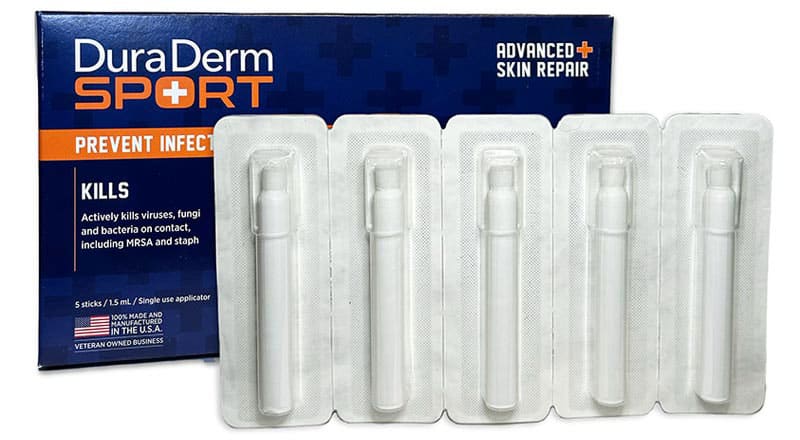

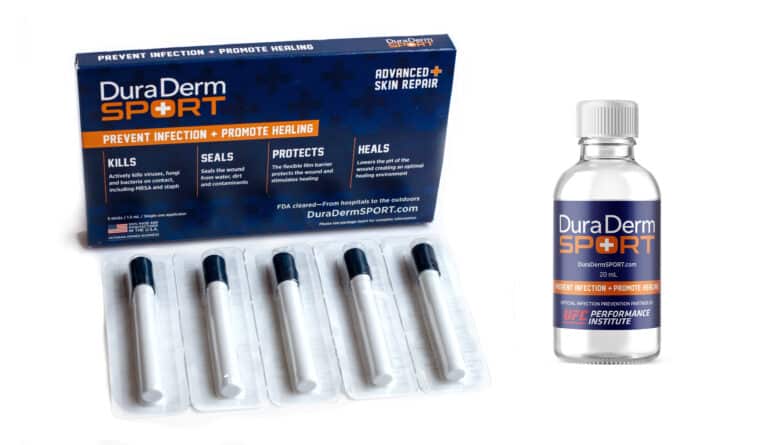
DuraDerm SPORT Duo
Now Available!

DuraDerm® SPORT is a FDA cleared Class I medical device. DuraDerm® SPORT is a non-antibiotic, microbicidal liquid polymer that forms a protective film barrier over the skin. WARNING: For use on minor wounds, cuts, abrasions, burns and scrapes that are clean and dry. Not for use on deep, infected, or puncture wounds. Do not use near eyes or mouth.