Hockey Gear and Eczema: Why Players Get Rashes (And What Actually Helps)
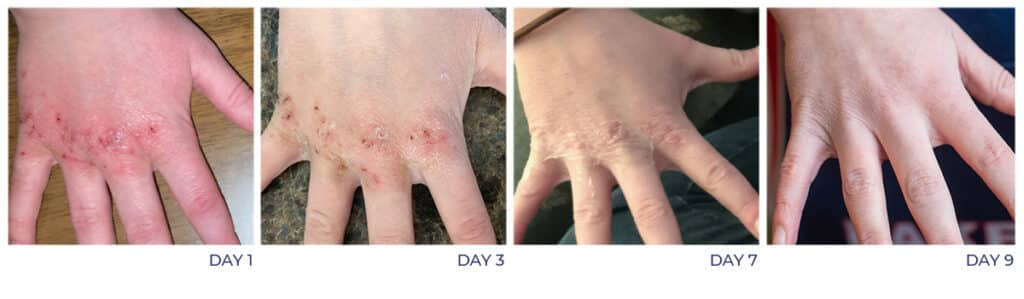
If you’ve ever peeled off your hockey gloves after a practice and noticed red, irritated skin, cracked knuckles, or a rash spreading across your hands and wrists — you’re not alone. Hockey-induced eczema is one of the most common skin complaints among players at every level, from youth leagues to professional hockey. And yet it’s still one of the least talked about.
What Is Hockey-Related Eczema?
Eczema (also called atopic dermatitis) is a condition where the skin becomes inflamed, irritated, and itchy. It’s not contagious, but it’s stubborn — especially for athletes who keep putting their skin through the same triggers practice after practice and game after game.
For hockey players, those triggers are everywhere. Sports-related eczema can flare up due to temperature changes, friction, sweat, and prolonged contact with gear. In hockey, you hit all of them, every time you step on the ice.
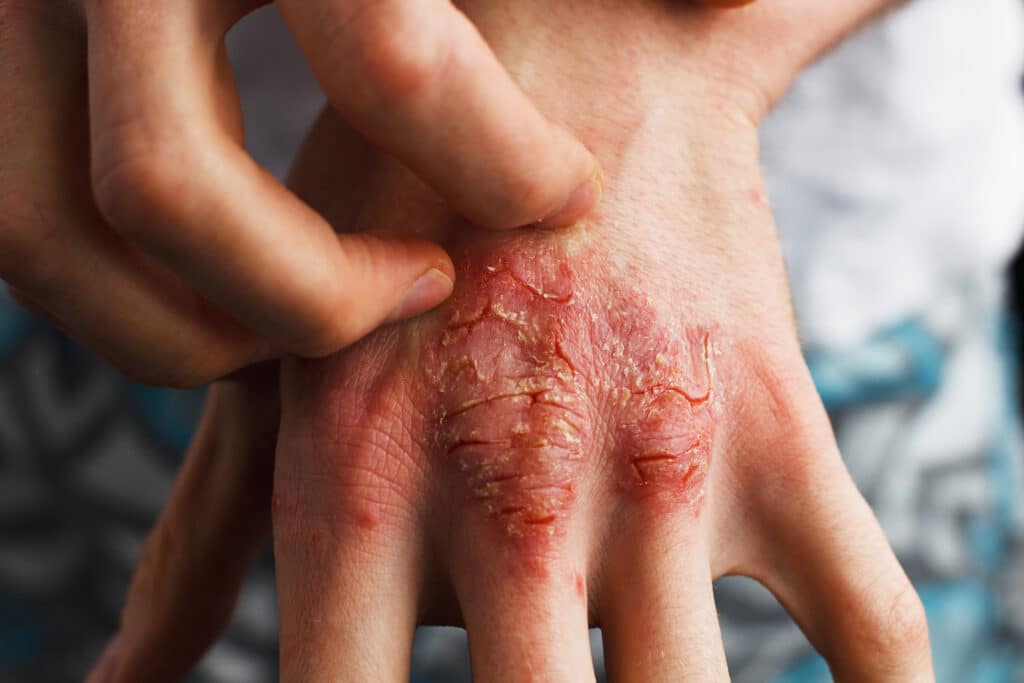
What does it look like?
Dry, thickened, or scaly patches
Redness or darkening of the skin
Intense itching before and after the rash appears
Cracked or raw skin, especially around joints and knuckles
Why Hockey Is Such a Tough Environment for Your Skin
Hockey gear creates constant friction. Gloves, wrist guards, shin pads, and elbow pads rub against your skin. That repeated friction breaks down the skin’s protective barrier.
The rink environment is harsh. Cold, dry air is a known eczema aggravator. Then you step off the ice and immediately heat up. That cycle of cold-to-warm-to-cold-again can trigger flare-ups even in players who don’t typically struggle with eczema.
Gear traps sweat and heat. Moisture trapped against skin, especially under tight gloves or pads, creates the kind of warm, irritated environment where eczema thrives. It’s also where bacteria can take hold, turning a simple irritation into something worse.
Gloves are the biggest offender. Even well-maintained gear has enough residual sweat and bacteria to aggravate sensitive skin.
What Most Players Try First (And Why It Falls Short)
The usual first step is a trip to the pharmacy — hydrocortisone creams, moisturizing lotions, barrier ointments. These products can provide temporary relief, and a dermatologist may prescribe stronger versions for severe flare-ups.
The core problem is that most creams and lotions wash off, sweat off, or rub off inside a glove in minutes. They’re not designed for athletic activity.
Eczema-prone skin struggles to defend against bacteria, and when the barrier is already compromised by dryness and friction, even minor exposure can set off a flare.
A Different Kind of Protection: DuraDerm SPORT
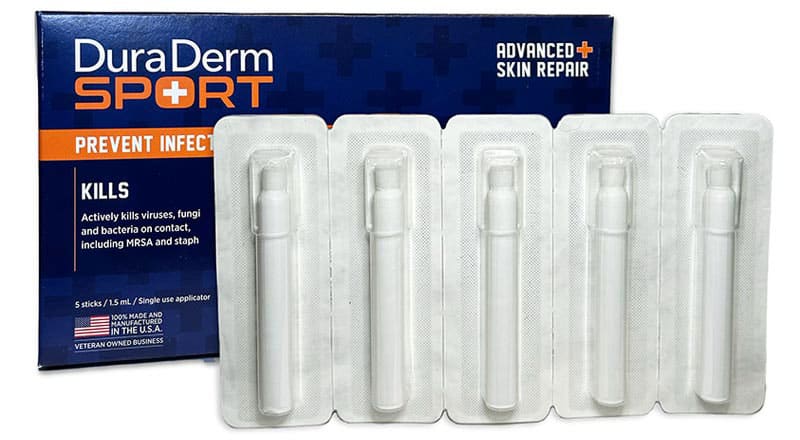
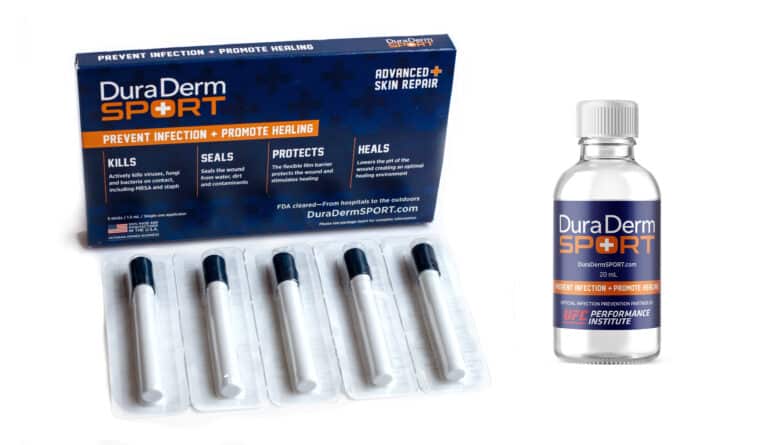
DuraDerm SPORT isn’t a cream or a lotion. It’s an FDA-cleared, non-antibiotic microbicidal liquid polymer that dries to create a flexible, waterproof film over the skin in about 30 seconds.
It creates a physical barrier. Once it sets, it acts like a second skin protecting irritated areas from the friction, moisture, and bacteria inside your gloves. You’re not just soothing the rash; you’re blocking the things that cause it to get worse.
It’s sweat- and water-resistant. Unlike most topical treatments, it stays put through a full skate. No reapplying between periods. No worrying that it wiped off on your gear.
It kills bacteria on contact. DuraDerm SPORT is microbicidal, which means it works against bacteria, viruses, and fungi — all things that can turn a friction rash into an infection. Eliminating that bacterial load is often the first step in allowing skin to heal.
It’s flexible. The elastomeric film bends and flexes with your body, so it doesn’t interfere with your movement or equipment.
Practical Tips for Managing Hockey Eczema
Let your gear breathe between sessions. Bacteria and moisture build up in gear that stays packed in a bag. Air it out after every use, and wash glove liners regularly.
Moisturize after you shower — not before you play. A fragrance-free moisturizer applied right after you rinse off helps replenish the skin barrier. But going into a game with a thick cream on your hands usually doesn’t survive contact with your gloves.
Don’t ignore early signs. Itching that starts before a visible rash appears is your skin’s warning signal. Addressing it early is much easier than managing a full flare-up.
Talk to a dermatologist if symptoms are severe. Eczema is a systemic condition — there’s no cure, but there are prescription options that can help manage more serious cases. DuraDerm SPORT works alongside those treatments, not instead of them.
Learn more. One hockey parent documented this exact journey, read her story here.
DuraDerm® SPORT is a FDA cleared Class I medical device. DuraDerm® SPORT is a non-antibiotic, microbicidal liquid polymer that forms a protective film barrier over the skin. WARNING: For use on minor wounds, cuts, abrasions, burns and scrapes that are clean and dry. Not for use on deep, infected, or puncture wounds. Do not use near eyes or mouth.